Most of us turn on the kitchen faucet without giving much thought to what might be living in the water. If it looks clear, smells normal, and tastes fine, we naturally assume everything is as it should be. Unfortunately, certain microorganisms can be present without producing noticeable changes in water quality.
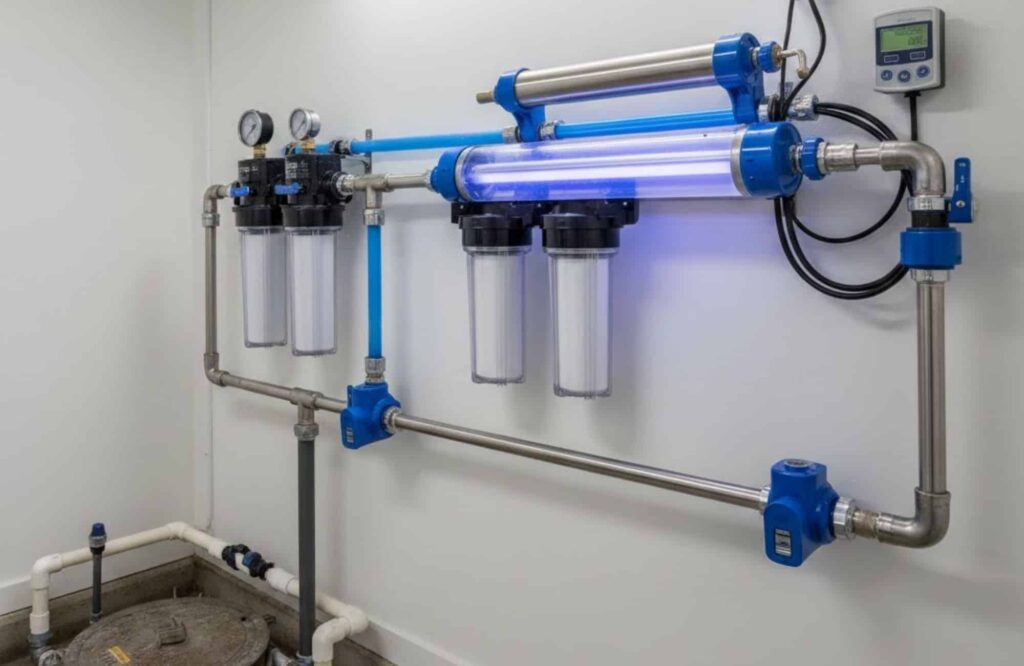
Installing a properly selected uv water treatment system can provide an additional layer of protection by using ultraviolet light to inactivate susceptible microorganisms without adding chemical disinfectants to the water.
This technology is particularly relevant for properties relying on private water supplies, although its suitability depends on individual water conditions.
Understanding how ultraviolet treatment works, where it fits within a filtration system, and what maintenance it requires can help homeowners make more confident decisions about their water supply.
How Ultraviolet Light Helps Treat Water
Ultraviolet water treatment relies on a relatively straightforward scientific principle. As water passes through a specialized chamber, it’s exposed to ultraviolet light at a germicidal wavelength.
This exposure damages the genetic material of susceptible microorganisms, interfering with their ability to reproduce and cause infection.
Unlike chemical disinfection, UV treatment doesn’t require adding chlorine to the water.
It also doesn’t significantly alter the water’s mineral composition, taste, or odor.
However, the effectiveness of ultraviolet treatment depends on several factors, including exposure intensity, water clarity, and flow rate.
That’s why appropriate equipment selection matters.
A system must deliver a suitable UV dose under the actual operating conditions of your household rather than simply expose water to a light source.
Why Private Well Owners Should Pay Particular Attention
Having a private well comes with certain advantages, but it also places greater responsibility on homeowners to monitor their water quality.
Unlike properties connected to regularly monitored municipal supplies, private well owners generally need to arrange their own testing and maintenance.
Appropriate UV water treatment for private wells can help address microbial contamination risks when incorporated into a properly designed treatment arrangement based on reliable water testing.
Groundwater quality may be influenced by surrounding land use, flooding, damaged well components, and other environmental conditions.
Even a well that has provided satisfactory water for years can experience unexpected changes.
Regular testing for relevant microbial indicators and other contaminants remains important.
If contamination is detected, investigate the underlying cause as well. Installing treatment equipment shouldn’t replace necessary well repairs or corrective maintenance.
Understanding What UV Treatment Can and Cannot Do
One of the common misconceptions about water treatment is that a single piece of equipment can address every possible concern.
In reality, different technologies serve different purposes.
Effective ultraviolet drinking water treatment primarily focuses on microbial disinfection rather than removing dissolved chemicals, hardness minerals, heavy metals, or suspended particles.
If your water contains significant sediment, iron, or other substances that interfere with ultraviolet light transmission, additional treatment may be necessary.
Sediment filtration can help remove suspended particles, while specialized equipment may address excessive iron or hardness where appropriate.
These treatment stages can create more suitable operating conditions for ultraviolet disinfection.
Think of UV as one important component within a broader water treatment strategy rather than a universal purification solution.
Why Water Testing Should Come Before Installation
It’s tempting to purchase treatment equipment based on a recommendation from a friend or neighbor. However, two nearby properties can have surprisingly different water conditions.
Appropriate laboratory testing helps identify microbial concerns and other characteristics that could influence treatment performance.
Water clarity, hardness, iron concentrations, and ultraviolet light transmission may all deserve consideration when designing a UV system.
Testing also helps determine whether additional filtration or conditioning equipment is required before disinfection.
For homeowners, this approach can prevent unnecessary spending while supporting more dependable treatment performance.
Nobody wants to discover that newly installed equipment isn’t suited to their water supply simply because an important condition was overlooked.
A little investigation beforehand can make a considerable difference.
Choosing Equipment That Fits Your Household
Ultraviolet treatment systems are available in different capacities and configurations.
A busy family with multiple bathrooms, frequent laundry loads, and substantial simultaneous water usage may require different equipment from a smaller household.
System selection should account for peak water flow, incoming water characteristics, validated disinfection performance, and installation requirements.
It’s also worth asking about intensity monitoring, warning alarms, and automatic shutoff options.
These features can help homeowners respond appropriately if treatment conditions fall outside acceptable operating limits.
Discuss equipment certification, replacement lamp availability, and servicing costs before making a purchase.
The most suitable system isn’t necessarily the most expensive one. It’s the one capable of meeting your property’s actual treatment requirements consistently.
Keeping Your UV Water System Working Properly
Ultraviolet disinfection equipment requires ongoing maintenance, even when everything appears to be functioning normally.
UV lamps gradually lose intensity over time. The protective quartz sleeve may also accumulate deposits that interfere with light transmission.
Follow manufacturer recommendations for lamp replacement, sleeve cleaning, and routine servicing.
Remember that ultraviolet disinfection generally requires electricity and doesn’t provide a lasting disinfectant residual throughout household plumbing.
Power interruptions or equipment failures therefore deserve immediate attention.
Periodic water testing remains important for verifying treatment effectiveness, particularly when your household depends on a private well.
Good maintenance isn’t especially complicated, but it shouldn’t be neglected.
Making Water Quality a Long-Term Household Priority
Protecting your household water begins with understanding its source and recognizing which concerns require attention.
Ultraviolet technology can play a valuable role in addressing microbial risks when combined with suitable equipment selection, appropriate pretreatment, and regular maintenance.
It’s not about purchasing every available filtration product. It’s about building a treatment arrangement that genuinely reflects your home’s water conditions.
From preparing breakfast to filling a glass before bedtime, water is part of countless everyday moments.
Giving its quality the attention it deserves is a practical investment in household well-being and greater confidence in the water you use.